

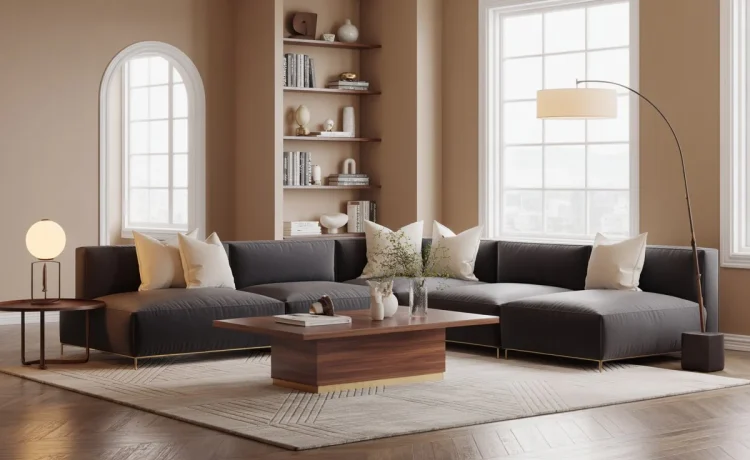
Purchasing a sofa is one of the most significant furniture investments you will make for your home. Aside from your bed, it is arguably the hardest-working piece of furniture in your entire living space. A sofa serves as a gathering spot for family movie nights, a workspace for remote afternoons, a comfortable place to entertain guests, and a sanctuary for weekend afternoon naps. Because it anchors the entire room visually and functionally, selecting the right one requires a thoughtful approach.
Unfortunately, the furniture industry makes it very easy to buy based solely on surface aesthetics. A sofa can look incredibly beautiful, trendy, and plush on a showroom floor or in a styled digital catalog, yet begin to sag, creak, and show severe signs of wear within less than two years. High-quality craftsmanship is almost entirely hidden beneath the upholstery fabric. To ensure you purchase a sofa that retains its shape, structural integrity, and comfort for a decade or more, you must look beyond the exterior appearance and evaluate these five critical components of internal construction.
1 The Frame Material and Construction Method
The frame serves as the skeleton of the sofa. It bears the weight of anyone sitting on it and maintains the overall structural shape over years of daily compression. If a frame bends or warps, the entire sofa is ruined, regardless of the quality of the cushions or fabric.
Wood Quality Matters
When evaluating a sofa frame, ask the salesperson exactly what type of wood was used. Low-quality sofas use engineered materials like MDF, particleboard, or cheap softwoods like fresh pine. These materials absorb moisture from the air, crack under pressure, and cannot hold wood screws or staples securely over a long period.
A high-quality sofa will feature a frame constructed from kiln-dried hardwood. Species like oak, maple, ash, or birch are dense and durable. The kiln-drying process is vital because it bakes out all residual moisture and sap from the wood, preventing the frame from warping, bowing, shrinking, or cracking as the seasons change.
Frame Joinery Techniques
How the pieces of wood are fastened together is just as important as the wood itself. Avoid sofas that rely strictly on industrial staples, glues, or simple wood screws to hold the main corners together. Under structural stress, these fasteners will pull loose, leading to a squeaking, wobbly frame.
Look for frames constructed using traditional woodworking joinery. Look for terms like double-doweled joints, mortise-and-tenon joints, or corner blocks glued and screwed into the frame corners. These techniques lock the structural components together, distributing weight evenly and preventing shifting.
2 The Seating Support System
The seating support system sits directly underneath the seat cushions. It provides the upward resistance necessary to give the sofa its spring and bounce, working in tandem with the frame to prevent sagging.
Eight-Way Hand-Tied Springs
This is universally considered the gold standard of sofa suspension craftsmanship. In this labor-intensive construction method, a craftsman installs heavy-gauge steel coil springs into the base of the frame and connects them by hand using a high-tensile twine. Each spring is tied firmly to the neighboring springs, the frame sides, and the front rail in eight different directions. This creates a deeply supportive, webbed network that prevents individual coils from shifting sideways and ensures that the weight of someone sitting on one side of the sofa is distributed evenly across the entire base.
Sinuous Spring Alternatives
If an eight-way hand-tied system sits outside your target budget, look for a high-quality sinuous spring suspension, also known as S-coils or zigzag springs. These systems consist of heavy, wave-like steel wires running horizontally across the frame spaced a few inches apart. While less intricate than hand-tied coils, a dense network of thick-gauge sinuous springs provides excellent support and durability, provided the steel is high-quality and secured with strong, noise-dampening clips to the frame rails. Avoid webbed support systems made entirely of elastic fabric straps, as these stretch out rapidly and cause the sofa to sag completely over time.
3 Cushion Core Composition and Density
The cushions dictate the immediate comfort level of the sofa and determine how clean and unwrinkled the piece looks after you stand up. When looking at cushion cores, you must evaluate the density rather than just the firmness.
Understanding Polyurethane Foam Density
The majority of modern sofas utilize high-density polyurethane foam cores. High density does not mean hard or stiff; it simply refers to the weight of the foam per cubic foot, which indicates how much material is packed into the cushion to resist collapse.
A quality sofa should feature a foam density rating of at least 1.8 to 2.5 pounds per cubic foot. Cheap furniture often uses foam rated below 1.5 pounds, which collapses permanently after a few months of heavy use, leaving unsightly body indentations. For an ideal balance of plush comfort and structure, look for high-resiliency foam cores wrapped in a soft layer of polyester batting or dacron down-wraps.
The Luxury of Down-Blend Cushions
If you prefer a soft, sink-in feel, down-blend cushions are a luxurious option. These consist of a foam or pocketed-coil core surrounded by a thick jacket filled with duck or goose down mixed with feathers. While exceptionally comfortable and plush, down cushions require regular fluffing and shaking to maintain their shape, and they will show wrinkling and compression as part of their natural charm.
4 Upholstery Fabric Durability and Fiber Type
The upholstery fabric is the most exposed component of the sofa, absorbing direct sunlight, friction from clothing, structural stretching, and occasional accidental spills. Choosing the wrong fabric can turn a structurally sound piece of furniture into an eyesore very quickly.
Deciphering the Wyzenbeek Double-Rub Count
When browsing fabric options, request to see the manufacturer specification card and look for the double-rub rating. This rating is determined by a mechanical test that mimics the action of someone sitting down and standing up repeatedly on the fabric until the threads break.
-
Light Duty: Under 10,000 double rubs, suitable only for accent chairs that are rarely used.
-
Medium Duty: 10,000 to 15,000 double rubs, adequate for standard residential use without pets or children.
-
Heavy Duty: 15,000 to 30,000+ double rubs, essential for busy family living rooms, households with pets, or high-traffic areas.
Fiber Selection Strategies
Synthetic performance fibers like solution-dyed acrylic, polyester blends, and polypropylene are exceptionally stain-resistant, easy to clean with mild soap, and highly resistant to UV fading. Natural fibers like linen and cotton offer a beautiful, classic texture but absorb liquids rapidly and are more prone to wrinkling and staining unless treated with a specialized stain-resistant textile finish. If you prefer leather, choose top-grain or full-grain leather rather than bonded leather. Bonded leather consists of shredded leather scraps glued to a synthetic backing, which peels and flakes off after a few years of friction.
5 Proportion, Fit, and Scale
The final thing you must look for is how the sofa matches human ergonomics and spatial dimensions. A sofa can be constructed perfectly but fail to serve your household if the proportions do not align with your physical needs or the architectural constraints of your room.
Testing for Ergonomic Comfort
Do not merely sit down on a sofa briefly in a showroom; test it exactly how you intend to use it at home.
-
Seat Depth: If you are tall, look for a deep seat configuration of 22 to 24 inches so your thighs are supported. If you are shorter, a shallow depth of 20 to 21 inches ensures your feet can touch the floor without your back arching away from the rear cushions.
-
Seat Height: Ensure your knees bend at a comfortable 90-degree angle when sitting back against the frame.
-
Armrest Placement: If you love to lie down horizontally on the sofa, look for low, padded rolled arms or flat track arms that can support your neck comfortably like a pillow.
Navigating Delivery Dimensions
Measure the total clearance path from your front curb into your living room before making a purchase. Document the width and height of every doorway, hallway corner, elevator interior, and stairwell banister. Many homeowners purchase a beautiful, oversized sectional only to discover on delivery day that the structural frame cannot physically clear the main apartment doorway or turn the tight corner of a historic staircase.
Frequently Asked Questions
What is the average lifespan of a high-quality sofa compared to a budget model
A properly constructed, high-quality sofa featuring a kiln-dried hardwood frame and an eight-way hand-tied spring system will easily last between 10 to 15 years, and can often be reupholstered to last even longer if the frame remains intact. In contrast, mass-produced budget sofas built with staple-joined particleboard and low-density foam cushions typically begin to sag, squeak, and show significant fabric wear within 2 to 5 years, requiring complete replacement.
How can I verify if a sofa actually has an eight-way hand-tied spring system
Because the spring system is completely sealed inside the dust cover at the base of the sofa, you cannot see it directly. However, you can test it by lifting the seat cushions and pressing down firmly on the base decking of the sofa. You should feel individual, resilient coils compressing smoothly with uniform resistance across the entire surface. If you press down and feel flat, horizontal wires, it is a sinuous spring system. If the base feels hard, hollow, and completely rigid, it likely uses cheap elastic webbing or flat wooden slats.
Is top-grain leather worth the extra cost over genuine leather
Yes, top-grain leather is vastly superior to materials labeled simply as genuine leather. In the furniture industry, genuine leather is a broad marketing term that often applies to the split-hide layers left over after the premium upper layers are removed. It is weaker, stiffer, and heavily processed with synthetic dyes. Top-grain leather uses the strongest outer layer of the hide, making it incredibly durable, soft to the touch, and capable of developing a beautiful, natural patina over time without cracking or peeling.
What is fabric pilling and how can I prevent it when selecting a sofa
Pilling occurs when loose fibers on the surface of a woven fabric rub together through friction, forming tiny, unsightly fuzzy balls. It is a natural characteristic of many woven textiles, particularly synthetic fibers and loose-woven wool or cotton blends. To minimize the risk of pilling, look for tightly woven upholstery fabrics with high thread counts or performance fabrics made from long, continuous-filament synthetic yarns, which do not shed loose fibers easily.
What are loose-back cushions versus attached-back cushions and which is better
Loose-back cushions can be completely removed from the frame, allowing you to flip them over to distribute wear evenly, rotate them to prevent sagging, and clean the fabric covers easily. They offer a casual, plush look but require regular straightening. Attached-back cushions are permanently sewn into the frame structure. They maintain a perfectly neat, tailored appearance at all times without requiring maintenance, but they cannot be flipped or easily repaired if the interior foam begins to break down.
Why does a sofa squeak and can it be repaired at home
A sofa squeaks because two components are rubbing together under friction, which is typically a sign of structural failure. It can occur when a wood joint loosens and the wood panels rub against each other, or when a metal spring clip comes loose from the frame and rubs against the steel wire. Repairing a squeak usually requires cutting open the bottom cambric dust cover to expose the underlying framework, tightening loose screws, reapplying wood glue, or adding nylon sleeves to loose metal clips.